

Catering the Grand Launch of The Golf Sanctuary
What happens when a corporate event moves beyond the traditional ballroom?
When The Golf Sanctuary opened its doors in Clayton, guests were invited to experience something quite different: interactive indoor golf, premium hospitality and a sophisticated food experience designed to keep people moving, talking and engaged.
For the venue’s grand launch, Peter Rowland catered for 80 guests with a bespoke menu created by Executive Chef Simon Hardie. Rather than treating the food as a separate part of the evening, the catering was designed around the way guests would use the space.
It is a useful example of how experiential venues are changing the way corporate launches, client events and private celebrations can be planned in Melbourne.
1. Moving Beyond the Traditional Event Venue
Corporate events do not always need to revolve around a formal dinner, conference room or cocktail function.
Interactive venues give guests something to do while they network, which can create a more relaxed and social atmosphere. The challenge for the event team is making sure the catering works with that environment rather than getting in the way of it.
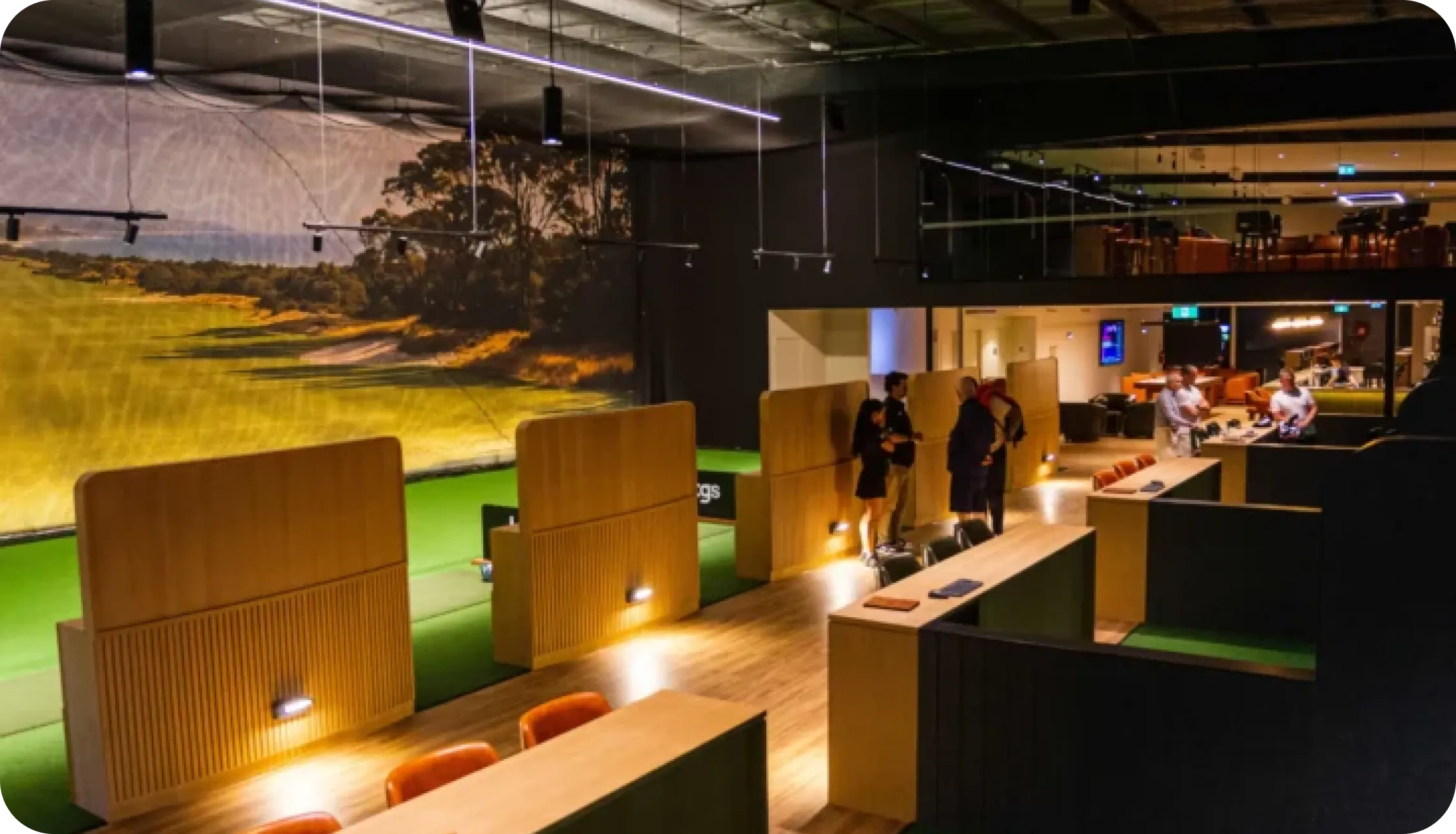
The Golf Sanctuary in Clayton combines indoor golf technology, private spaces, a bar and hospitality facilities, creating a setting that can accommodate corporate entertaining, networking and social celebrations.
For event planners considering The Golf Sanctuary for venue hire the appeal is the combination of entertainment and hospitality in one location.
Guests can take part in the golf experience, move between different areas and continue conversations throughout the event, rather than being tied to a single table for the evening.
That creates a different set of requirements for the catering team.
2. Designing a Menu for Guests on the Move
Catering an interactive event is different from catering a formal seated dinner.
Guests may be standing, moving between activities or watching other people play. Food therefore needs to be easy to handle while still looking and tasting like premium event catering.
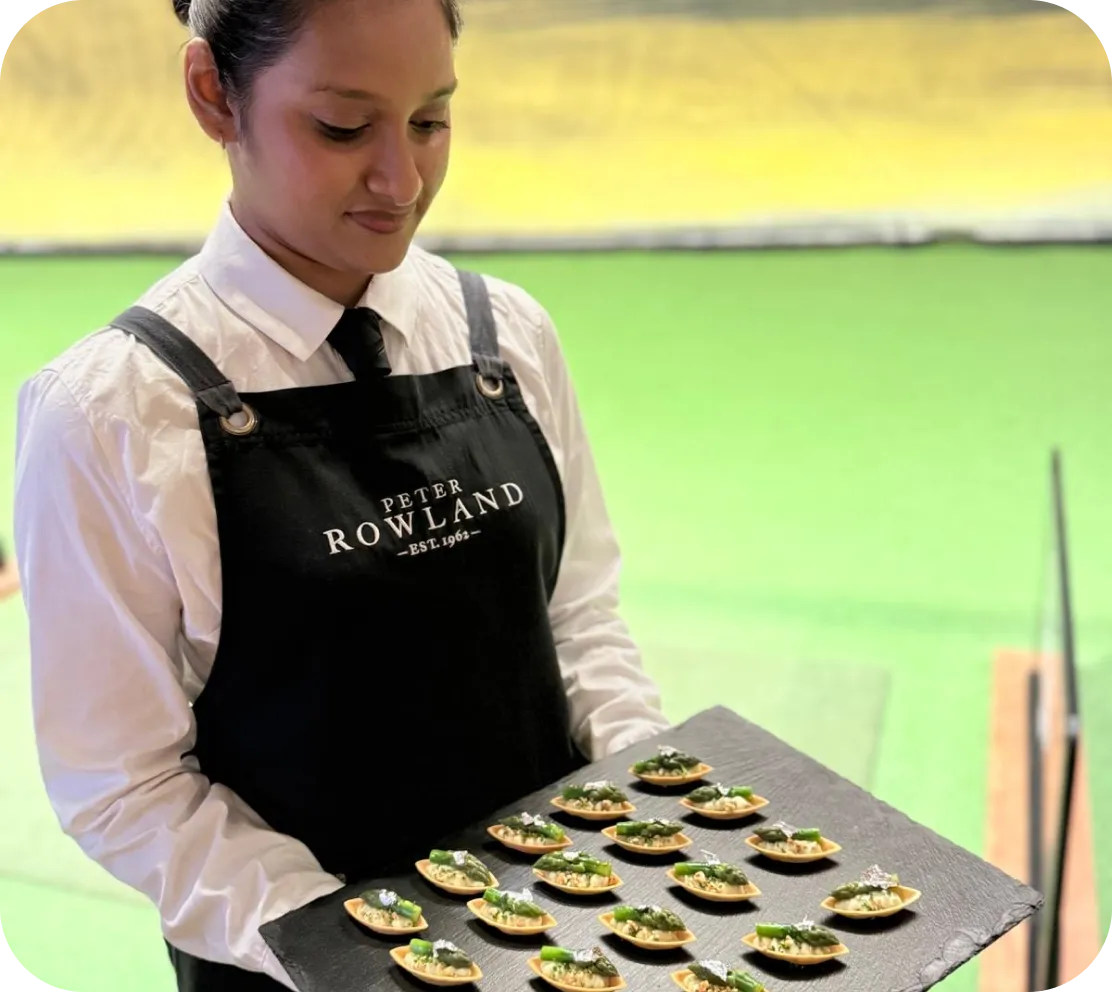
For The Golf Sanctuary launch, Peter Rowland Executive Chef Simon Hardie developed a bespoke selection of canapés designed for a roving service format.
The menu included:
Asparagus Barquette
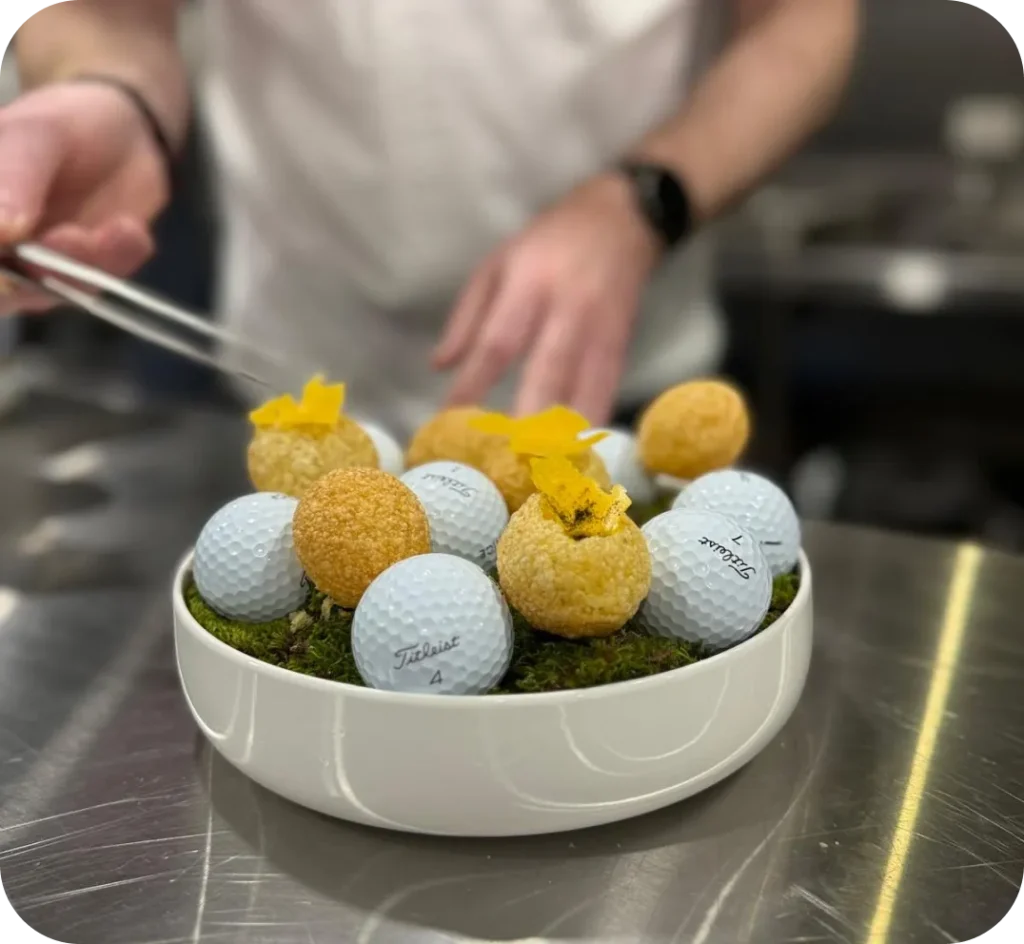
Sweetcorn Cloud
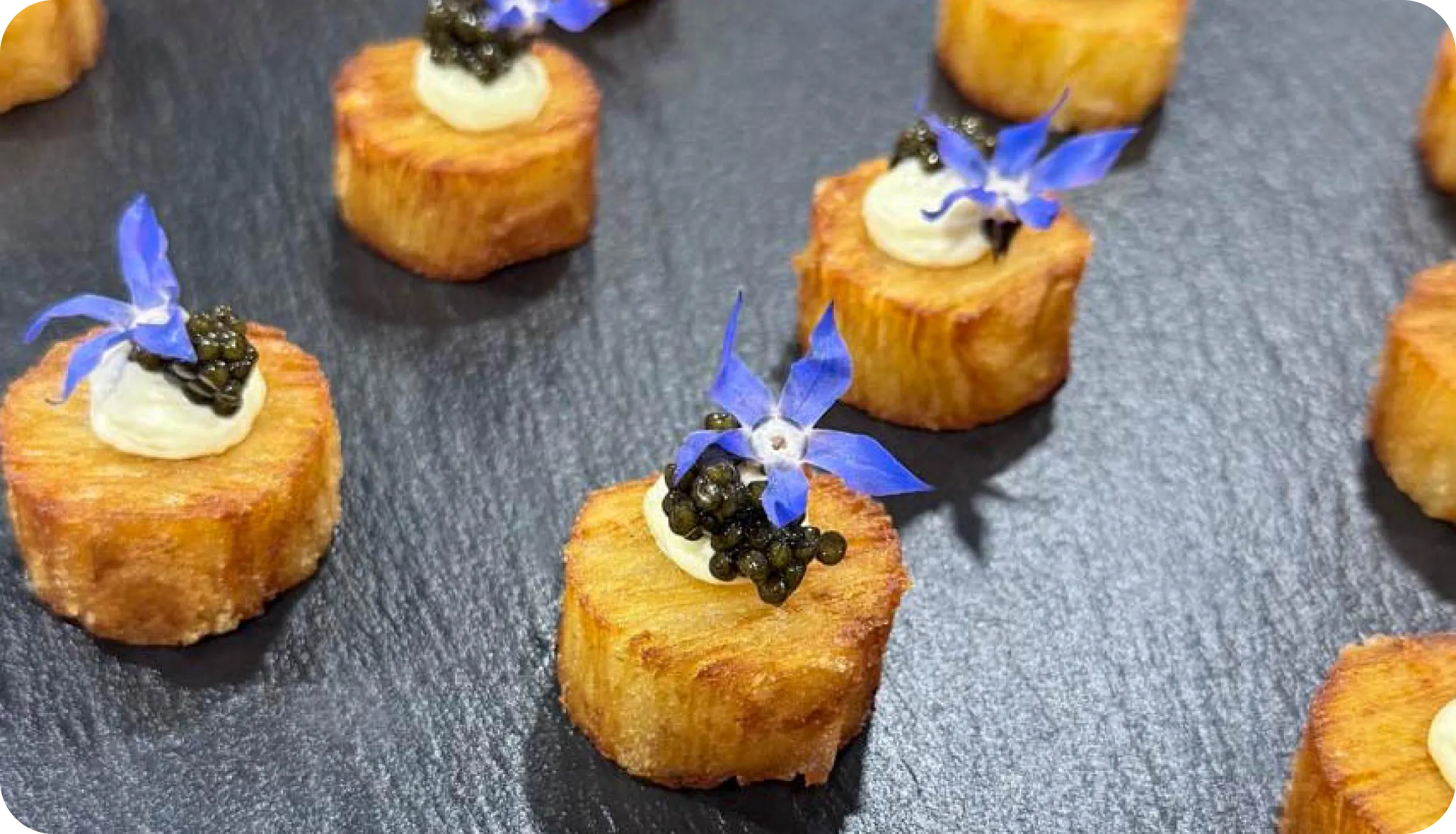
Crispy Potato with Oscietra Caviar
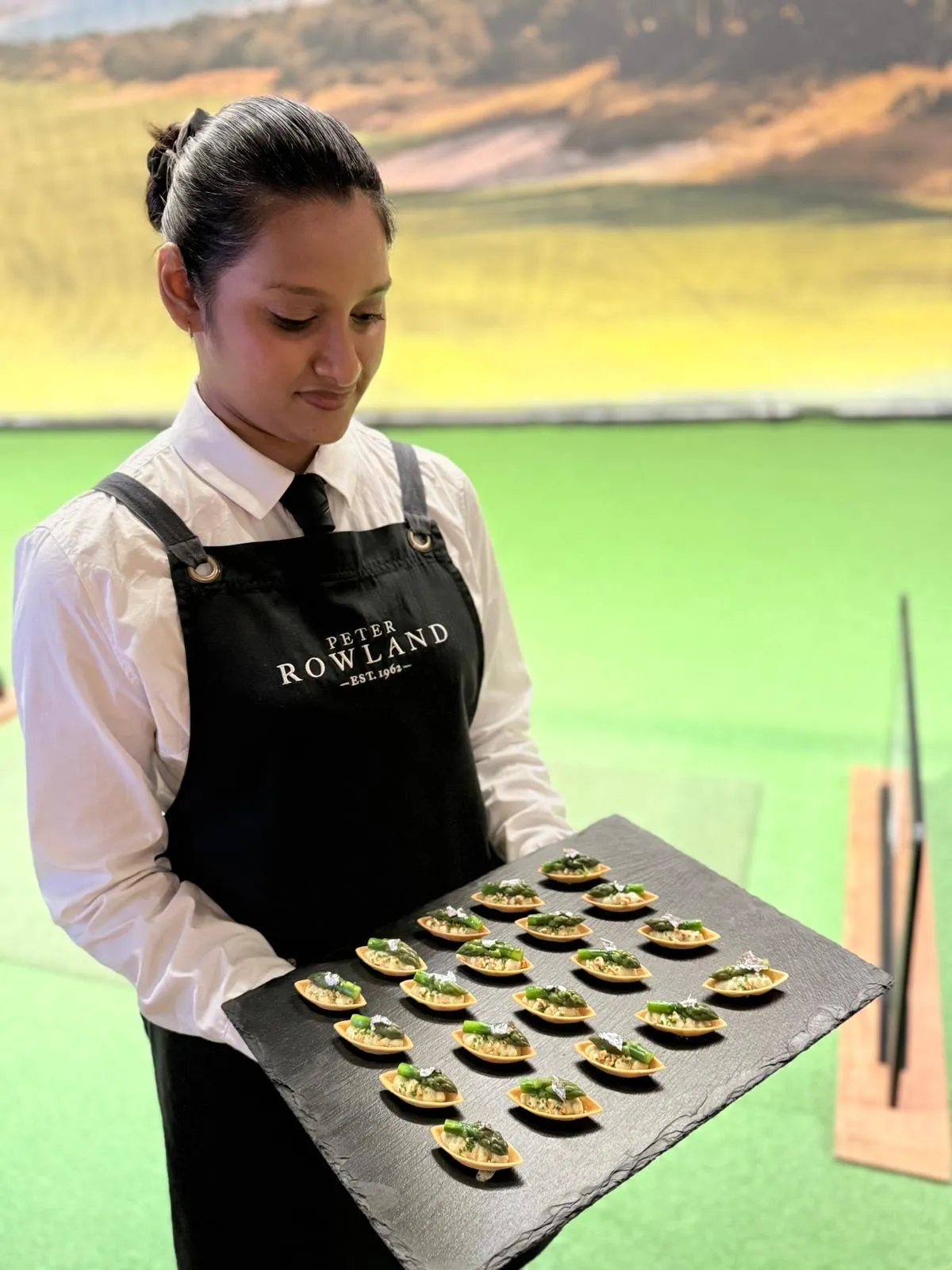
Asparagus Barquette
A crisp pastry shell was filled with whipped blue cheese and chives, topped with fresh asparagus and finished with edible silver leaf.
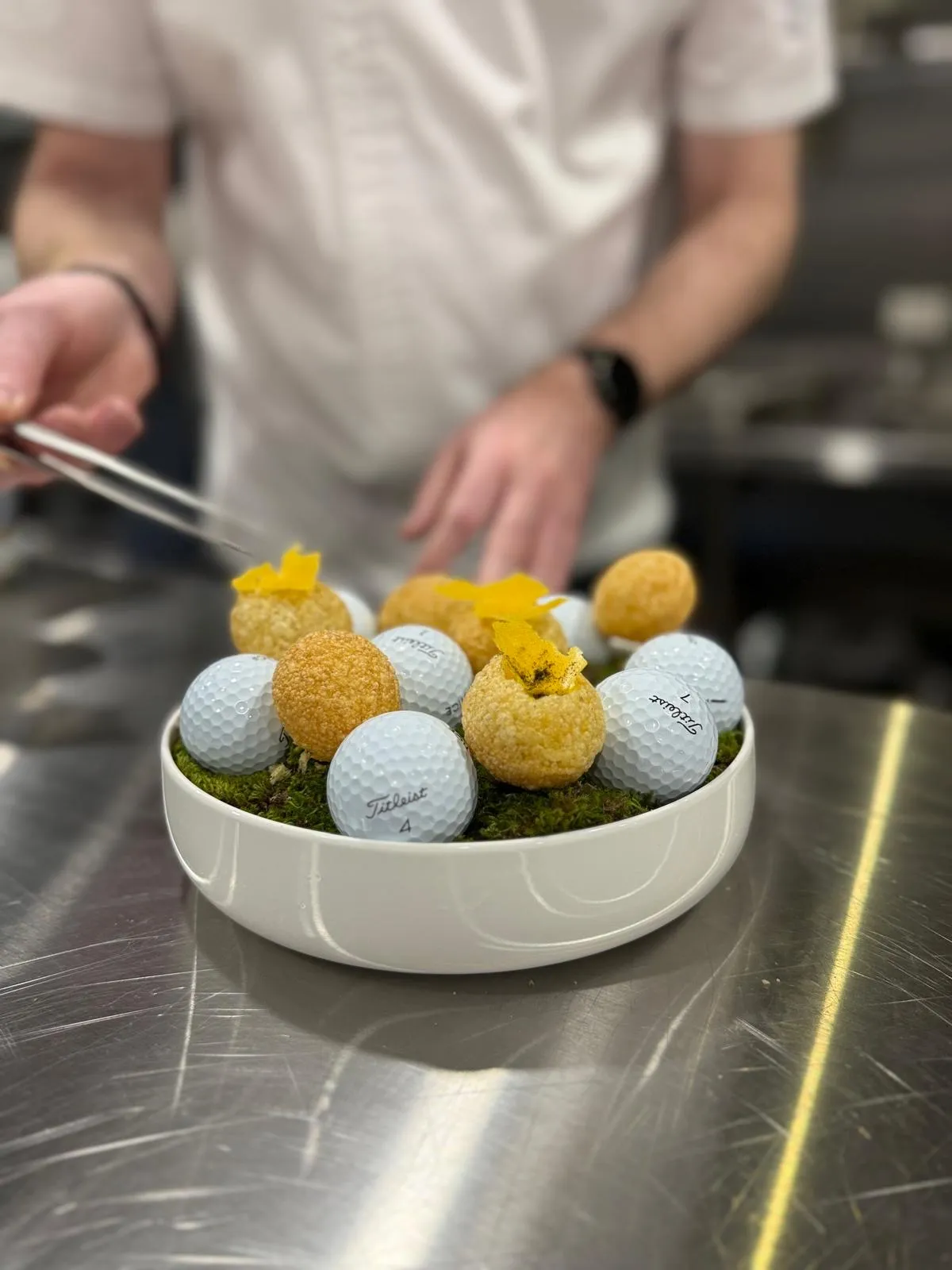
Sweetcorn Cloud
A delicate crisp sphere was paired with caponata and sweetcorn foam, finished with a corn tuile and leek ash.
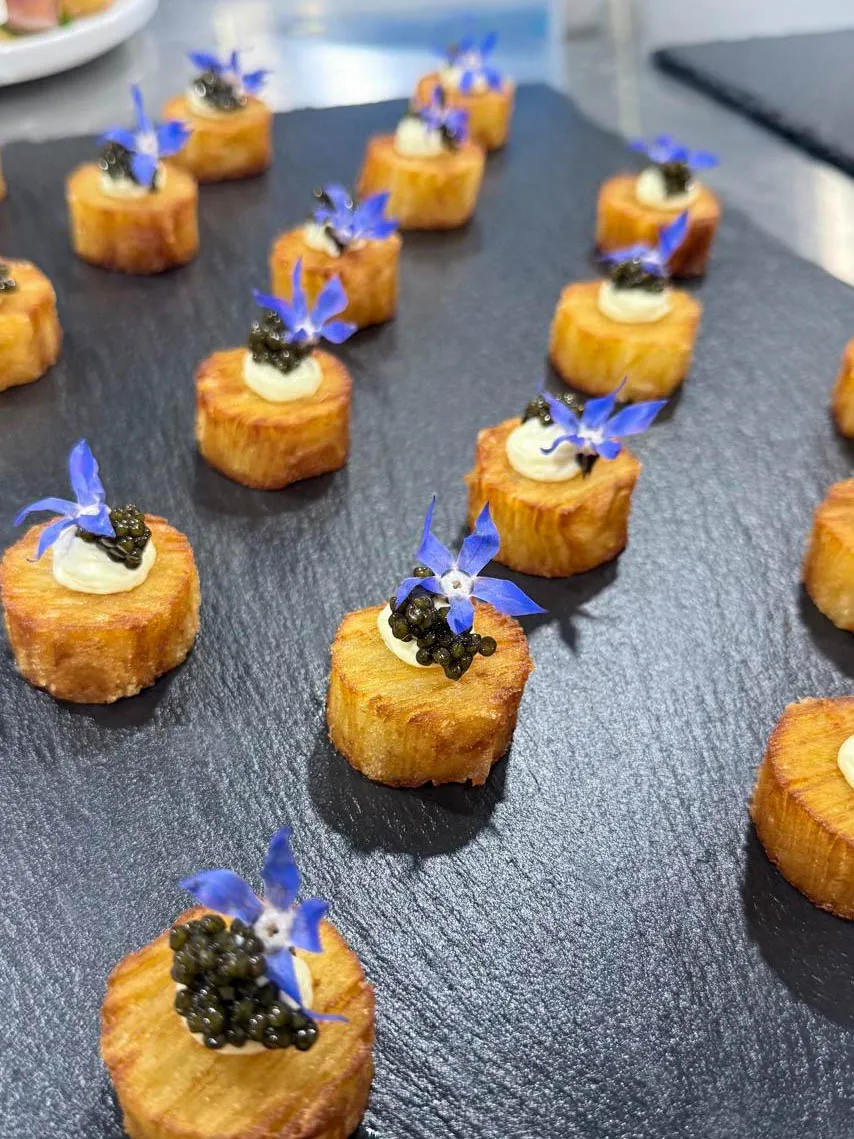
Crispy Potato with Oscietra Caviar
Golden-pressed potato layers were topped with horseradish cream, Oscietra caviar and borage.
Each canapé brought a different texture and flavour to the menu, while remaining suitable for a cocktail-style event.
The result was food that felt refined without requiring guests to stop what they were doing to sit down and eat.
3. Making the Food Part of the Experience
A successful event menu does not necessarily need to follow the theme literally.
Instead, subtle details can connect the food to the setting.
At The Golf Sanctuary, the presentation of the canapés reflected the contemporary feel of the venue without turning the menu into a collection of golf-themed gimmicks.
The rounded form of the Crispy Potato with Oscietra Caviar, for example, offered a subtle visual connection to golf-ball geometry. The Sweetcorn Cloud provided a more playful, modern element through its light textures and presentation.
This type of approach allows the food to complement the event environment while still standing on its own as quality cuisine.
For corporate hosts, that can be particularly valuable when the event is built around a strong brand, venue or entertainment concept.
4. Catering Around the Entertainment
The food itself is only part of the challenge at an interactive event.
Service needs to be carefully planned around the way guests move through the venue.
Roving service
Rather than asking guests to return to a buffet or remain at their tables, waitstaff can bring food directly into the event space.
This keeps the hospitality moving and allows guests to continue networking and participating in activities.
The right portion size
Canapés need to be substantial enough to satisfy guests but manageable enough to eat while standing or moving around.
A well-planned menu can also introduce more substantial options later in the event so guests are not relying solely on delicate finger food throughout the evening.
Timing matters
Food service needs to work around the entertainment schedule.
At an interactive venue, poorly timed service can interrupt conversations or activities. Good floor management means understanding where guests are likely to be, when they are moving between activities and when the room needs another wave of food or drinks.
Beverage service
Drinks also form part of the overall experience. Cocktails, local beers and Victorian wines can be selected to complement the menu while matching the style and pace of the event.
This is where experienced event catering becomes more than simply preparing food. It is about coordinating food, beverage, service and guest movement so that everything feels effortless.
5. Why More Corporate Events Are Moving Beyond the Ballroom
For many companies, an event is no longer simply an opportunity to put guests around a table.
Corporate launches, client entertaining and team celebrations increasingly need to give people something memorable to experience.
An interactive venue can help create that atmosphere by giving guests a shared activity while leaving room for conversation and networking.
But the venue alone does not create the experience.
The food, service, styling, timing and overall event flow all need to work together.
The Golf Sanctuary launch demonstrates how this can be achieved. The indoor golf experience provided the entertainment, while the Peter Rowland catering team developed a menu and service style that complemented the way guests used the space.
For planners looking at unique Melbourne event venues, this is an important consideration. The most suitable venue is not necessarily the one with the most impressive facilities. It is the one where the venue, catering and entertainment can work together to create the right experience for the guests.
6. What Event Planners Can Take From The Golf Sanctuary Launch
The launch offers several practical lessons for companies planning their own experiential event.
Think about how guests will move
A menu designed for a seated dinner may not work as well when guests are standing, networking and participating in activities.
Choose food that suits the setting
Premium canapés can deliver a sophisticated dining experience without requiring a formal table service.
Make the theme subtle
Food can reflect a venue or brand through shape, presentation and flavour without becoming overly literal.
Plan service as carefully as the menu
The best food can lose its impact if it arrives at the wrong time or interrupts the guest experience.
Treat catering as part of the event design
Food and beverage should work alongside the venue and entertainment rather than being planned as an afterthought
Bringing Food, Venue and Experience Together
The grand launch of The Golf Sanctuary shows how corporate events can move beyond traditional formats without compromising on hospitality.
An interactive venue can provide the energy and entertainment, while thoughtful catering gives guests another reason to remember the occasion.
The key is making sure the two work together.
From bespoke canapé design to roving service and careful floor management, every detail contributes to how guests experience the event.
For companies planning a corporate launch, client function, team celebration or private event in Melbourne, the right combination of venue and catering can turn a gathering into an experience that guests remember long after the final round.
Peter Rowland’s corporate catering team can help event planners develop a menu and service approach around the venue, occasion and guest experience.